
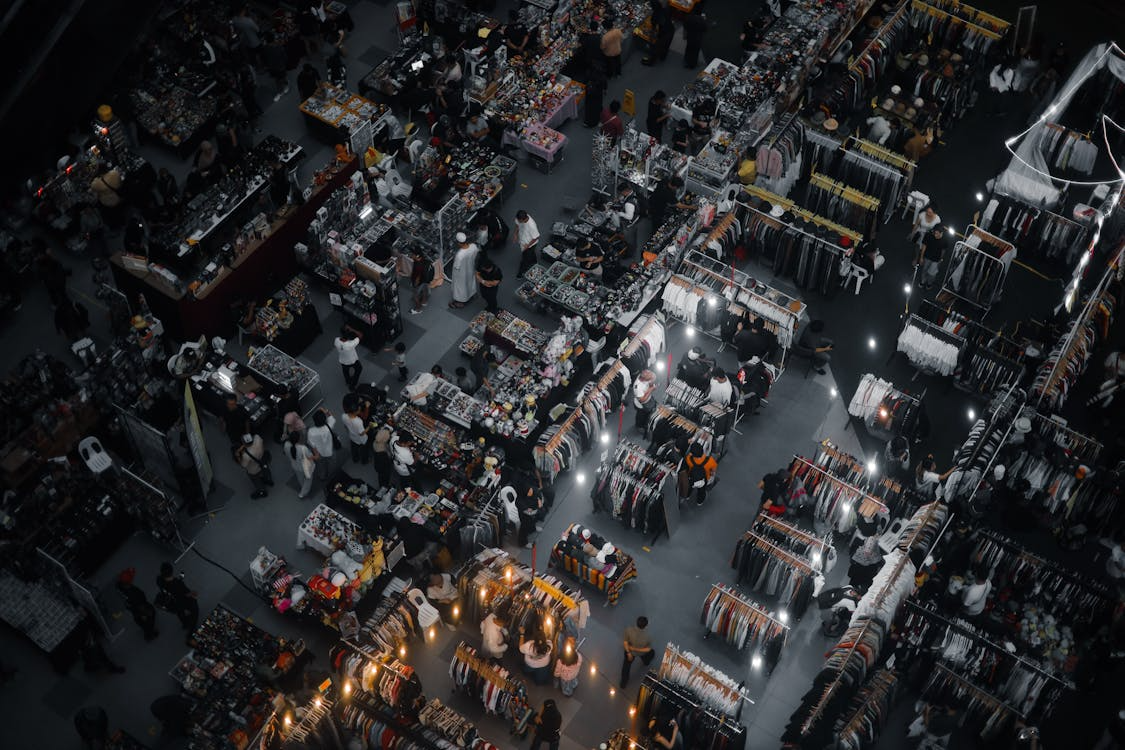
In the bustling streets of Kuala Lumpur, the quiet workshops of Kelantan, and the digital marketplaces connecting Sabah and Sarawak to the world, a silent engine powers Malaysia. It isn’t just the gleaming multinational towers or the massive export conglomerates; it is the “Mak Cik” selling nasi lemak, the tech startup in a co-working space, and the social enterprise revitalizing traditional crafts. These are Malaysia’s Small and Medium Enterprises (SMEs).
The phrase “Jom Sapot Lokal” is more than just a catchy slogan or a hashtag; it is a rallying cry for economic resilience and community survival. Supporting local SMEs is not merely a charitable act—it is a strategic investment in our own backyard. When we choose to buy local, we are choosing to secure the livelihoods of our neighbors, preserve our cultural heritage, and build a self-sustaining economy that benefits everyone.
The Economic Impact of Lokal SME in Malaysia
It is easy to underestimate the power of a small business until you look at the numbers. SMEs are often referred to as the “backbone” of the Malaysian economy, and recent statistics prove that this backbone is stronger and more vital than ever.
According to the Department of Statistics Malaysia (DOSM) reports released in mid-2025, Micro, Small, and Medium Enterprises (MSMEs) demonstrated remarkable resilience. In 2024 alone, MSMEs contributed a staggering 39.5% to Malaysia’s Gross Domestic Product (GDP), valued at over RM650 billion. Furthermore, the sector grew by 5.8%, outpacing the national GDP growth rate of 5.1%. This data highlights a crucial fact: when the global economy faces turbulence, it is often the agility and grit of local SMEs that keep the national engine running.
Perhaps the most significant statistic, however, is employment. SMEs are the largest employers in the nation. As of 2024, they employed approximately 8.1 million people, representing 48.7% of the country’s total workforce. Nearly half of the working population in Malaysia relies on an SME for their livelihood. When we support these businesses, we are directly helping to secure jobs for millions of Malaysians, reducing unemployment, and ensuring financial stability for countless families.
How Benefits Circle Back
One of the most compelling arguments for “sapot lokal” is the economic concept known as the Local Multiplier Effect. This concept illustrates how money spent locally stays in the community longer and works harder than money spent on foreign goods.
When you purchase a cup of coffee from a massive international chain, a significant portion of that money leaves the country—going towards foreign headquarters, offshore suppliers, and global shareholders. However, when you spend that same amount at a local café or buy beans from a Malaysian roaster, the money stays here.
Direct Income: The business owner earns revenue, which is used to pay their staff—who are likely locals living in your community.
Supplier Support: Local SMEs are far more likely to source their materials locally. A Malaysian batik maker buys wax and cloth from local suppliers; a local bakery buys flour and eggs from nearby farms. This creates a supply chain where one purchase supports multiple local businesses.
Community Investment: Local business owners live in the community they serve. They spend their profits at other local businesses—grocers, mechanics, and barbers—keeping the wealth circulating within the neighborhood.
Tax Revenue: SMEs pay taxes to the Malaysian government, which funds our public infrastructure, schools, healthcare, and roads.
This cycle creates a “virtuous circle” of prosperity. Every Ringgit spent on a homegrown business acts as a seed that grows into wages, tax revenue, and further spending, eventually circling back to benefit the consumer in the form of a thriving, well-maintained community.
Beyond Profits: Social Impact and Cultural Heritage
While the economic numbers are impressive, the qualitative impact of SMEs is equally profound. Malaysian SMEs are the custodians of our culture and the drivers of social change. They are the ones preserving ancient arts that might otherwise vanish in the face of mass production. They are the ones innovating solutions for local environmental problems.
Many modern Malaysian SMEs are evolving into Social Enterprises—businesses that exist to solve a social or environmental problem. These companies prove that profit and purpose can coexist, using their business models to uplift marginalized communities and protect the planet.
Notable Malaysian SMEs Making a Difference
To understand the real-world impact of supporting local, we can look at specific examples of Malaysian SMEs that are changing the landscape.
1. Batik Boutique: Preserving Heritage, Empowering Artisans
Batik Boutique is a shining example of how a local SME can transform lives while preserving cultural heritage. Founded with a vision to disrupt the cycle of poverty, this award-winning social enterprise works with artisans from marginalized communities to produce high-quality batik fashion and homeware.
The impact is tangible. Batik Boutique is an accredited Social Enterprise and a certified B Corp (a global standard for social and environmental performance), with an impact score significantly higher than the median business. They have engaged over 400 artisans and impacted the lives of more than 1,700 beneficiaries.
By training women from low-income backgrounds in sewing and textile skills, they provide sustainable income opportunities where few existed before. When you buy a shirt or a gift set from Batik Boutique, you aren’t just buying a piece of cloth; you are actively funding skills training, fair wages, and the preservation of the intricate art of Malaysian batik.
2. Biji-biji Initiative: Champions of Sustainability
On the environmental front, the Biji-biji Initiative has pioneered the circular economy in Malaysia. Since its inception in 2013, Biji-biji has challenged the “take-make-dispose” culture by turning waste into valuable products and inspiring sustainable living.
Through their various arms, including Beyond Bins and Me.reka, they have tackled plastic waste by engaging communities to recycle and upcycle materials. Their impact numbers are impressive: over 38,000 people inspired and more than 138 impact projects created. They don’t just sell eco-friendly products; they educate. They run open-source educational programs and makerspaces that teach Malaysians how to build, fix, and innovate using sustainable methods.
Supporting Biji-biji is a vote for a greener Malaysia. It demonstrates that local SMEs can lead the way in solving global climate issues, right from our own backyard.
There Are Many Other Local SME’s Working Hard to Make a Difference for Us
Of course, the success stories we hear are just the tip of the iceberg. Across the nation, countless other SMEs are working tirelessly behind the scenes to uplift our quality of life and strengthen our economy. From the independent agricultural smallholders adopting sustainable practices to ensure our food security, to the tech innovators in Cyberjaya developing homegrown digital solutions for everyday problems, the effort is widespread. We see it in the local healthcare clinics providing personalized care in suburban neighborhoods and in the eco-tourism operators in Sabah and Sarawak who protect our natural wonders while sharing them with the world. These business owners face daily challenges—rising costs, supply chain disruptions, and fierce competition—yet they persist. Their resilience does not just keep their own lights on; it illuminates the path forward for the entire country, proving that every small effort contributes to a greater national impact.
In Summary
The transition to a high-income nation isn’t just about foreign direct investment or government mega-projects; it is about the daily choices of 34 million Malaysians.
“Jom Sapot Lokal” is a mindset. It requires us to look past the convenience of ubiquitous global brands and seek out the hidden gems in our community. It asks us to be patient with a local seller, to pay a fair price for a handmade craft, and to take pride in products that carry the label “Made in Malaysia.”
When we support SMEs, we are not just consumers; we become investors in our nation’s future. We help a father send his children to university; we help a young entrepreneur refine an innovation that could change the world; we help a rural artisan keep a dying art alive.
So, the next time you need to buy a gift, grab a meal, or source a service, pause and look around. There is likely a Malaysian SME ready to serve you with quality, passion, and a story that makes every cent worth it.
Jom Sapot Lokal. Because when they thrive, we all thrive.